
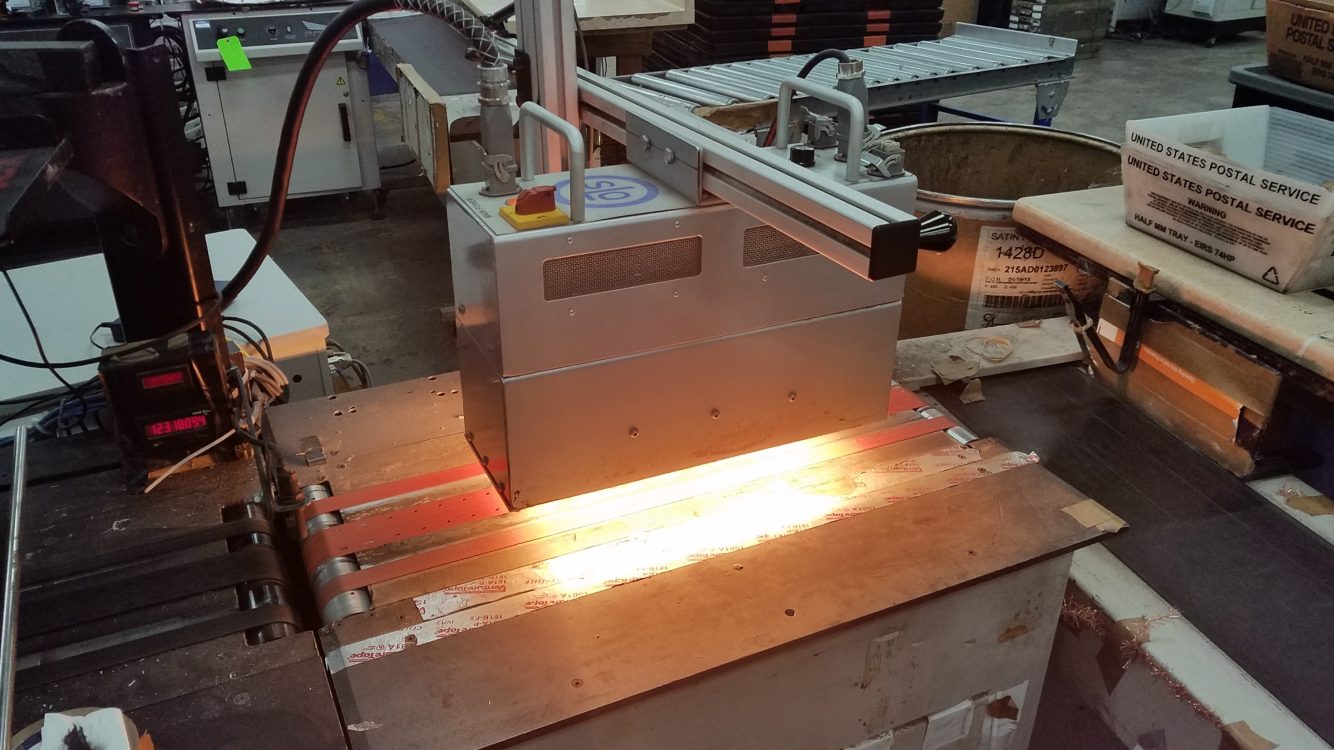
Improve Production Efficiency with Advanced Infrared Drying Systems.
Oxytech Systems ™ designs and manufacturers custom infrared drying systems in the USA.
What Is Infrared Drying?
Infrared drying is a highly efficient process that uses infrared energy to remove moisture, solvents, water-based coatings, inks, and adhesives from a wide variety of materials. Unlike conventional hot air systems that heat the surrounding air first, infrared drying transfers energy directly to the product surface. This direct energy transfer allows manufacturers to achieve faster drying speeds, lower energy consumption, and improved product quality. 
Modern infrared drying technology is widely used throughout the printing, converting, packaging, coating, textile, automotive, metal finishing, woodworking, and industrial manufacturing industries. Companies rely on infrared drying systems to increase production speeds while maintaining consistent product quality.
How Infrared Drying Works
The principle behind infrared drying is straightforward. Infrared emitters generate radiant energy that is absorbed by the material being processed. As the product absorbs this energy, moisture or solvents evaporate rapidly without requiring excessive airflow or long drying tunnels.
An infrared drying system can be designed to match nearly any production process. Depending on the application, the system may utilize short-wave, medium-wave, or long-wave infrared emitters. Each technology offers advantages for different substrates, coating types, production speeds, and operating temperatures.
Because infrared drying delivers energy directly where it is needed, manufacturers often experience faster line speeds and more consistent drying performance.
Benefits of Infrared Drying
Many manufacturers choose infrared drying because it offers significant operational advantages over conventional drying methods.
Some of the primary benefits include:
- Faster drying times
- Improved production efficiency
- Reduced energy consumption
- Smaller equipment footprint
- Better temperature control
- Consistent product quality
- Lower operating costs
- Increased manufacturing throughput
- Improved coating performance
- Reduced maintenance requirements
An efficient infrared drying system allows manufacturers to maximize productivity without sacrificing product quality.
Infrared Drying in the Printing Industry
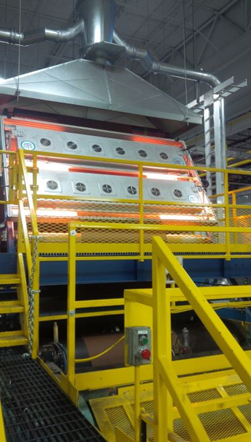
Industrial Infrared Drying System with Evacuation Hood
The printing industry has become one of the largest users of infrared drying technology. Sheetfed presses, web presses, flexographic presses, offset presses, gravure presses, and digital printing equipment all benefit from properly designed infrared drying systems.
Printing applications include:
- Water-based inks
- Solvent-based inks
- Primers
- Varnishes
- Aqueous coatings
- Adhesives
- Specialty coatings
- Soft-touch coatings
Proper infrared drying improves ink adhesion, minimizes smearing, reduces blocking, and produces cleaner finished products.
Infrared Drying for Converting Applications
Converting operations demand high-speed production with consistent drying performance. Infrared drying provides rapid moisture removal while helping maintain substrate quality.
Typical converting applications include:
- Label converting
- Flexible packaging
- Paper converting
- Film converting
- Foil converting
- Laminating
- Coating lines
- Adhesive drying
A properly engineered infrared drying system can significantly improve production capacity while reducing waste.
Energy Efficiency of Infrared Drying
One of the greatest advantages of infrared drying is its exceptional energy efficiency. Traditional drying systems waste considerable energy by heating large volumes of air before any heat reaches the product.

Industrial Infrared Drying System E Stop
With infrared drying, radiant energy is directed precisely where it is needed. Less energy is wasted, resulting in lower utility costs and improved operating efficiency.
Many manufacturers achieve measurable reductions in energy consumption after upgrading to modern infrared drying systems.
Infrared Drying Improves Product Quality
Quality is a critical factor in manufacturing. Uneven drying can cause coating defects, poor adhesion, inconsistent gloss, curling, or substrate damage.
Properly designed infrared drying provides controlled and uniform heating across the product surface. This consistent energy delivery helps produce high-quality finished products with fewer defects.
Manufacturers often report improvements in:
- Surface appearance
- Adhesion
- Print quality
- Color consistency
- Gloss uniformity
- Product durability
- Overall customer satisfaction
Infrared Drying System Design
Every production line has unique requirements. An effective infrared drying system should be customized to meet the specific needs of each application.
Important design considerations include:
- Web width
- Production speed
- Coating chemistry
- Ink type
- Substrate material
- Available installation space
- Product temperature limitations
- Ventilation requirements
- Electrical service
- Safety requirements
A customized infrared drying solution delivers better performance than a standard, one-size-fits-all approach.
Industries That Use Infrared Drying
Today, infrared drying is used across numerous industries because of its flexibility and efficiency.
Common industries include:
- Printing
- Packaging
- Label manufacturing
- Flexible packaging
- Paper converting
- Textile manufacturing
- Automotive manufacturing
- Metal fabrication
- Wood products
- Electronics
- Food packaging
- Industrial coating
- Pharmaceutical packaging
Each industry benefits from faster drying, improved quality, and increased productivity.
Choosing the Right Infrared Drying System
Selecting the proper infrared drying system requires careful evaluation of production requirements.
Manufacturers should consider:
- Current production speed
- Future production goals
- Existing drying limitations
- Energy usage
- Available installation space
- Maintenance requirements
- Product quality objectives
- Return on investment
Working with an experienced supplier ensures the infrared drying solution matches both current and future manufacturing needs.
Why Manufacturers Upgrade to Infrared Drying
Many production facilities replace older drying technologies with modern infrared drying systems because they deliver measurable improvements.
Common reasons for upgrading include:
- Higher production speeds
- Better drying consistency
- Lower operating costs
- Reduced downtime
- Improved product quality
- Lower maintenance expenses
- Reduced energy consumption
- Increased production flexibility
A properly engineered infrared drying upgrade can quickly improve manufacturing performance while lowering long-term operating costs.
The Future of Infrared Drying
As manufacturers continue seeking higher productivity and greater energy efficiency, infrared drying will remain an essential technology. Advances in emitter technology, controls, temperature monitoring, and automation continue to improve the performance of modern infrared drying systems.
Smart controls now allow operators to precisely regulate energy output, maintain consistent product temperatures, and optimize production efficiency. These innovations help manufacturers reduce waste while increasing throughput.
Conclusion
Infrared drying is one of the most effective technologies available for industrial drying applications. By transferring radiant energy directly to the product, infrared drying systems deliver faster drying speeds, improved product quality, reduced energy consumption, and increased production efficiency.
Whether used in printing, converting, packaging, coating, or industrial manufacturing, infrared drying provides reliable, repeatable performance that helps manufacturers remain competitive. Investing in a properly designed infrared drying system can improve productivity, lower operating costs, and provide long-term value for nearly any manufacturing operation.